· 3 min read · Jawa Timur · Trekking
TUMPAK SEWU - INDONESIA'S NIAGARA FALLS
Local tradition holds that washing one's face or bathing in the streams flowing from Tumpak Sewu brings youthfulness, clarity of mind, and good fortune, as the water is blessed by the sacred mountain above.
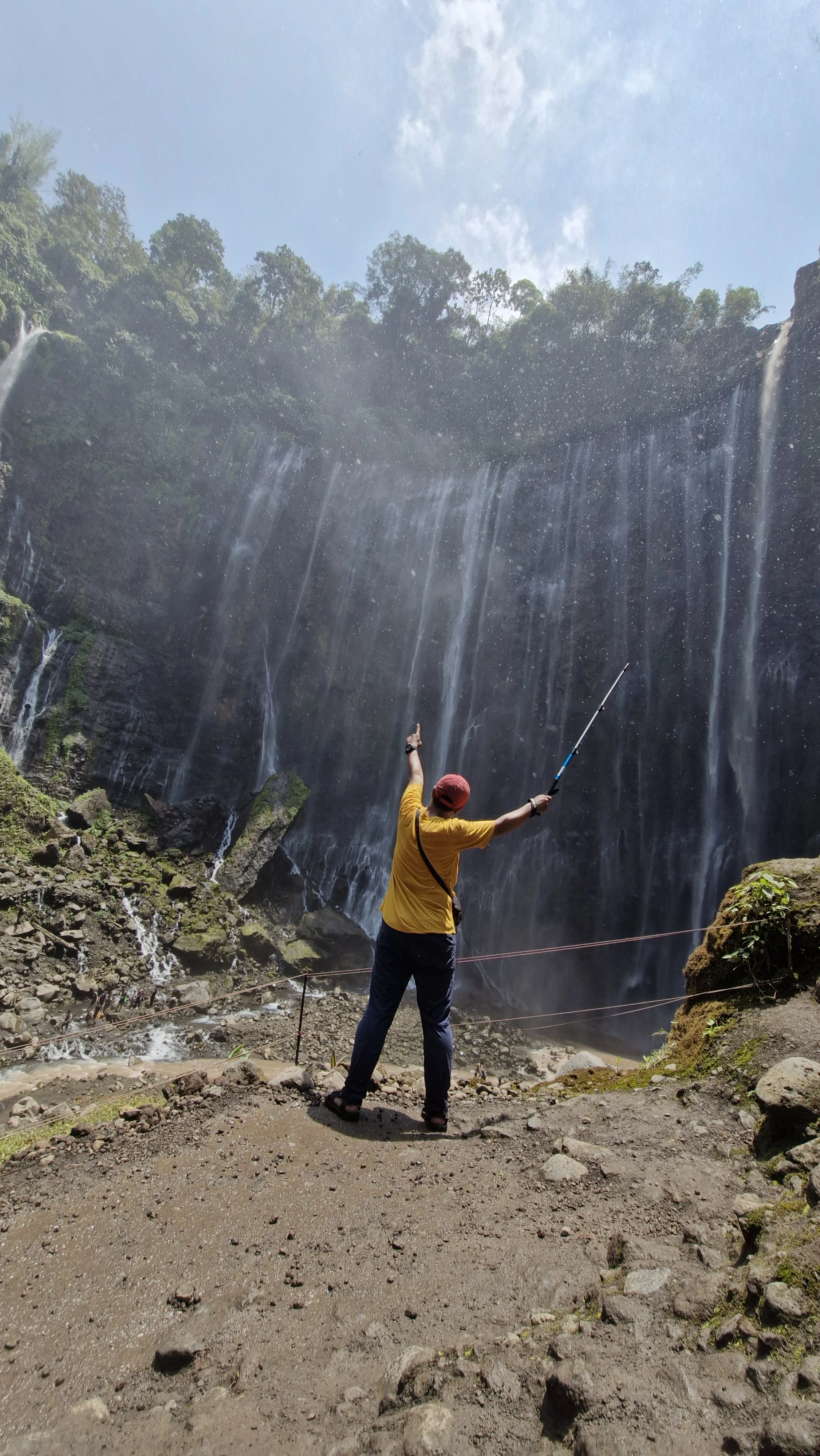
Tumpak Sewu Waterfall—often referred to as the "Niagara of Indonesia"—is one of Java’s most breathtaking natural wonders. Straddling the border between Lumajang Regency and Malang Regency in East Java, this extraordinary curtain waterfall plunges approximately 120 meters (390 feet) into a lush, jungle-clad canyon.
Its name, geological origins, and local culture tell a fascinating story.
1. What's in a Name?
In the Javanese language, "Tumpak Sewu" roughly translates to "A Thousand Stacked Waterfalls" (Tumpak meaning overlapping or stacked, and Sewu meaning a thousand).
While there aren't literally one thousand distinct streams, the name describes the sheer grandeur of the waterfall: a broad, semicircular amphitheater where dozens of water streams spill down mossy rock walls simultaneously, fed by the spring waters of Mount Semeru, Java’s highest active volcano.
2. Geological History & Origin Story
The natural history of Tumpak Sewu is intertwined with the violent volcanic history of East Java.
Millions of years of eruption cycles from Mount Semeru deposited layers of volcanic ash, lava, and tuff across the landscape.
Carving the Canyon: Over thousands of years, rivers flowing down from the slopes of Semeru carved deep, sheer gorges into these volcanic deposits. The river eventually found a sudden drop off a massive rock precipice, creating the dramatic canyon known today as the Glidik River valley.
Unlike single-drop waterfalls fed purely by a single river channel, Tumpak Sewu is fed both by surface river flow and sub-surface aquifer springs trickling out through permeable rock layers along the cliff face. This creates the iconic "water curtain" effect across the cliff wall.
3. Local Legends & Cultural Significance
According to local Javanese folklore around the slopes of Mount Semeru:
The waters originating from Mount Semeru are considered sacred by local Hindu and Javanese communities. Semeru is venerated as Mahameru, the abode of the gods in Hindu cosmology.
Local tradition holds that washing one's face or bathing in the streams flowing from Tumpak Sewu brings youthfulness, clarity of mind, and good fortune, as the water is blessed by the sacred mountain above.
4. From Hidden Gem to World-Class Destination
Despite its deep geological history, Tumpak Sewu was virtually unknown to international travelers until relatively recently.
For decades, Tumpak Sewu was known primarily to local villagers, bamboo harvesters, and adventurous local hikers who ventured down into the steep Glidik River canyon.
Around 2014–2015, local villagers from Sidomulyo Village (Lumajang) and neighboring communities recognized the tourism potential of the site. They collaborated to build initial access trails, safety bamboo ladders, and panoramic viewpoints.
With the rise of travel photography and social media, the breathtaking view from the Panorama Point (looking across the cliff at the mist-covered falls with Mount Semeru towering in the background) vaulted Tumpak Sewu onto the global stage as one of Southeast Asia's must-visit natural sights.
The Tumpak Sewu Experience Today
Visitors to Tumpak Sewu today experience two distinct perspectives:
The Panorama Overlook: Standing at the rim of the canyon to witness the full semicircular expanse of the waterfall framed by jungle and mist.
The Canyon Descent: A steep, challenging trek down into the canyon via bamboo ladders and wet rock paths to reach the bottom floor (Coban Nirwana), where you stand directly beneath the thundering spray and explore nearby sites like Gua Tetes (a cave with water dripping through stalactites).