· 4 min read · Jawa Timur · Trekking
The Solitary Flame: History, Myths, and Miners of Ijen
Pipes are installed into the active gas vents to cool and condense the sulfur gas into a dark red liquid. Once it cools and hardens into solid yellow rock.
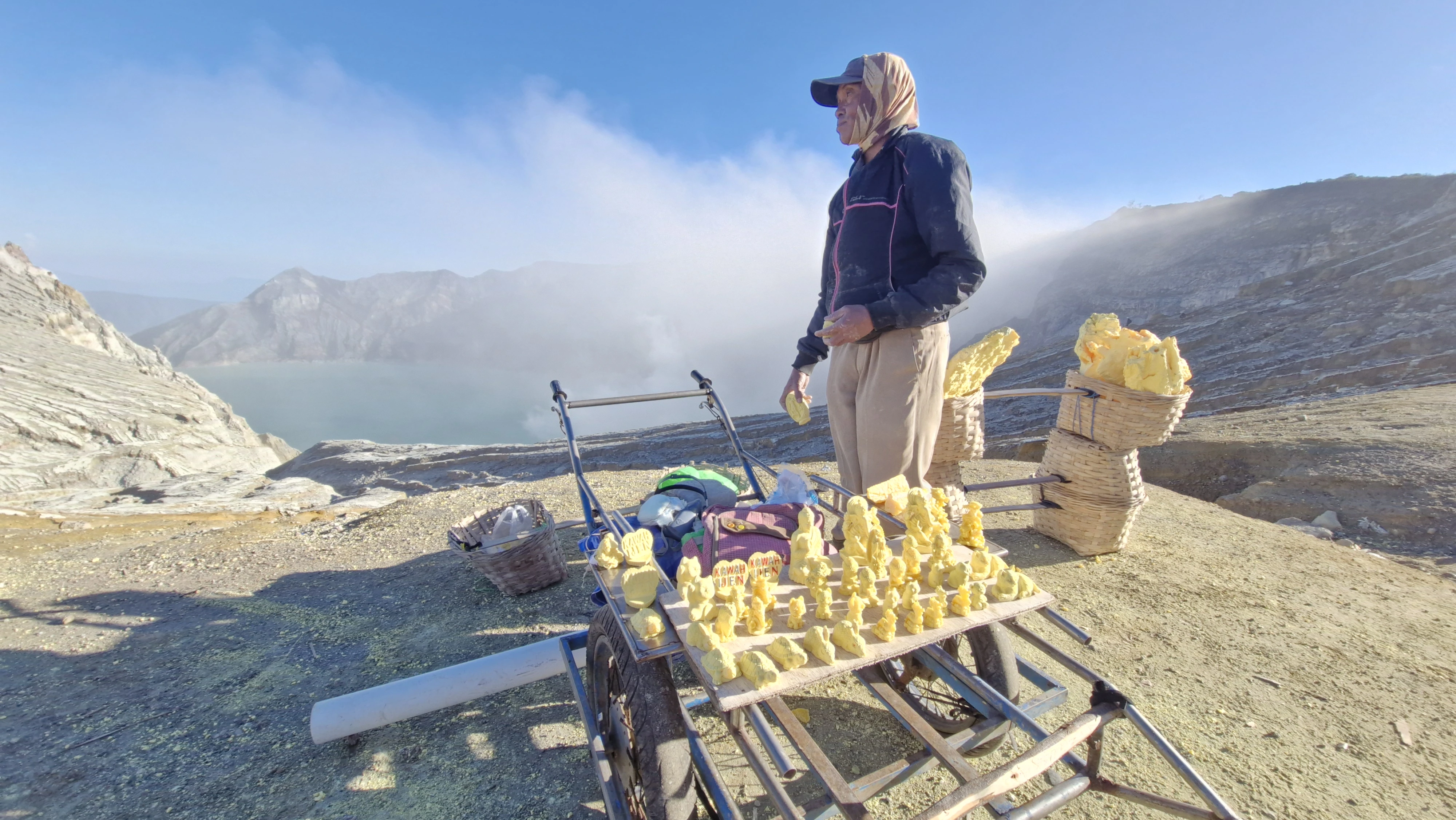
Mount Ijen (Gunung Ijen) is an active stratovolcano located on the eastern border of East Java, Indonesia, between the Banyuwangi and Bondowoso regencies. Famous worldwide for its mesmerising "blue fire" and intense turquoise acid lake, Ijen holds a rich geological history and a deep-rooted cultural legacy.
🌋 Geological Origin & History
The Ijen Caldera Formation
Millions of years ago, a massive super-volcano (Old Ijen) dominated the landscape of Eastern Java.
Around 50,000 years ago, a violent, explosive collapse created a massive crater—the Ijen Caldera—spanning over 20 kilometers in diameter.
Over thousands of years, new smaller volcanic cones emerged along the rim of this ancient caldera. Mount Ijen itself is the highest and most active feature among these post-caldera structures.
The World’s Largest Acidic Crater Lake
Inside the 1-kilometer-wide crater sits Kawah Ijen, recognized as the largest highly acidic crater lake in the world:
The water has a pH of less than 0.5 (comparable to battery acid) due to high concentrations of sulfuric and hydrochloric acids.
The vivid turquoise-green color comes from dissolved metals, particularly iron and aluminum, interacting with the sulfur gases bubbling up from subterranean magma chambers.
⚡ The Legendary "Blue Fire"
One of Ijen’s most famous phenomena is its rare Blue Fire (Api Biru), visible only in total darkness before dawn.
How it forms: Contrary to popular belief, the liquid lava itself isn't blue. Instead, high-pressure sulfuric gas emerges from volcanic vents at temperatures reaching up to 600℃. When these hot sulfur gases come into contact with oxygen in the air, they ignite, burning with an electric blue flame.
Liquid Fire: As the sulfur gas condenses into liquid sulfur, it continues to burn as it flows down the slopes, creating the illusion of glowing blue lava rivers.
Note: Outside of Ijen, this phenomenon is rarely seen on such a scale anywhere else in the world (with a few minor exceptions like Dallol in Ethiopia).
⛏️ The Sulfur Miners of Ijen
The history of Ijen is deeply tied to human endurance and local culture through its traditional sulfur mining industry.
Since the 1960s, local miners have harvested pure elemental sulfur directly from the crater floor.
Pipes are installed into the active gas vents to cool and condense the sulfur gas into a dark red liquid. Once it cools and hardens into solid yellow rock, miners break it using iron bars.
The Daily Challenge: Miners carry bamboo baskets weighing between 70 to 100 kg (150 to 220 lbs) up from the steep crater floor and down the mountain trail, navigating thick, suffocating sulfur fumes with minimal protective gear.
This sulfur is refined locally and used in various industries, including sugar refining, rubber vulcanization, cosmetics, and matches.
📜 Historical Eruptions & Impact
While relatively quiet compared to nearby Mount Merapi or Mount Kelud, Ijen has a history of significant eruptions:
1817 Eruption: The most severe recorded historical eruption occurred in January 1817. Explosive activity ruptured the crater wall, causing the acidic lake to spill over into surrounding rivers, destroying nearby villages and farmlands.
Modern Activity: Modern phreatic (steam-driven) eruptions occurred in 1917, 1936, and 1999, often releasing dangerous gas clouds (SO2 and H2S) that require temporary closures of the crater rim to visitors and miners.
💡 Visiting Ijen Today
Today, Mount Ijen is a world-renowned destination for hikers and travelers seeking to witness the blue flames, sunrise over the caldera, and the surreal landscape of the acidic lake.
Best Time to Hike: Starts around 1:00 AM – 2:00 AM to reach the crater rim and descent to the floor before sunrise to catch the blue fire.
Essential Gear: Gas masks with active carbon filters are strictly required due to volatile sulfur gases.